A rare case of pancreatic schwannoma diagnosed preoperatively by EUS-FNB
Endoscopic ultrasound

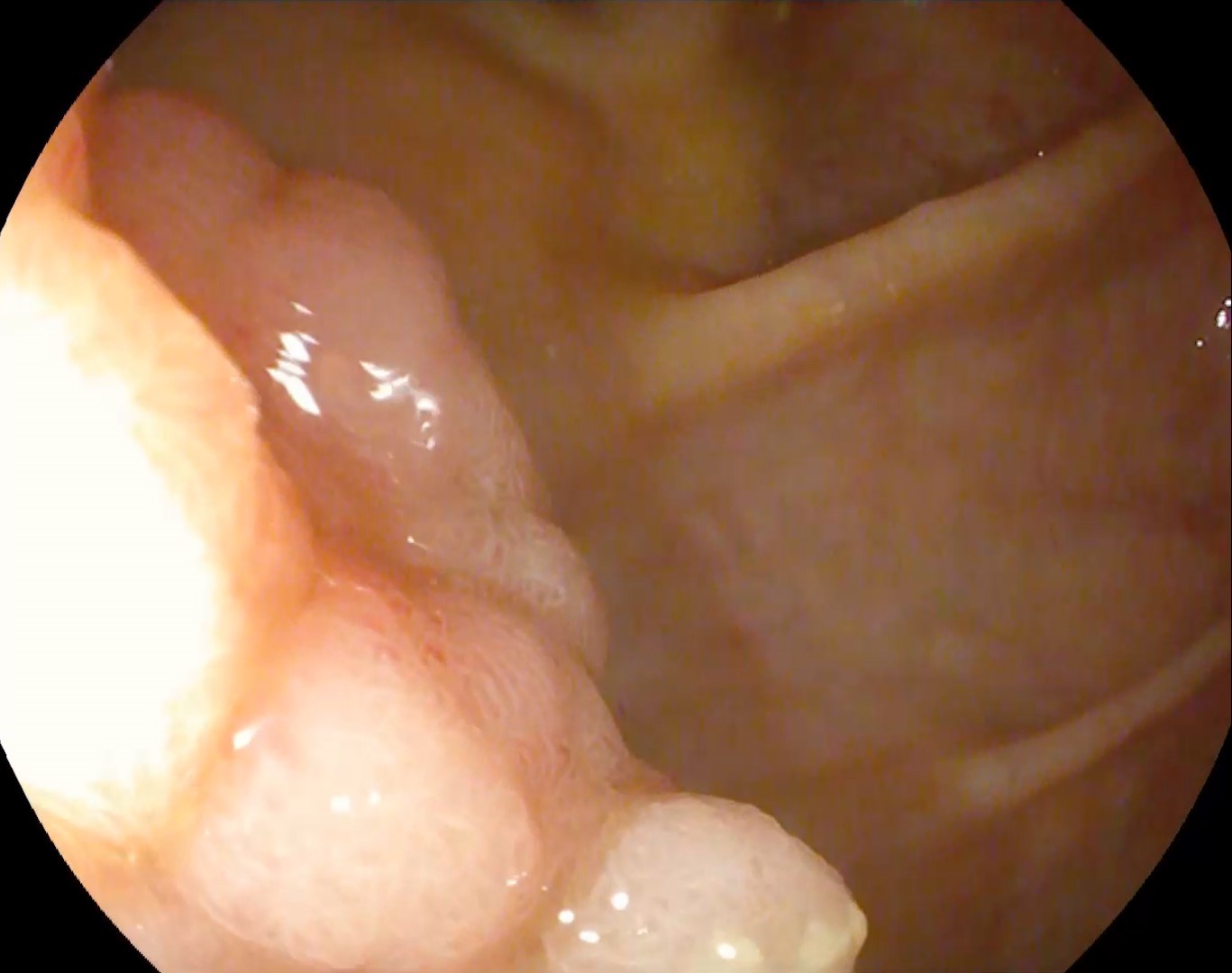
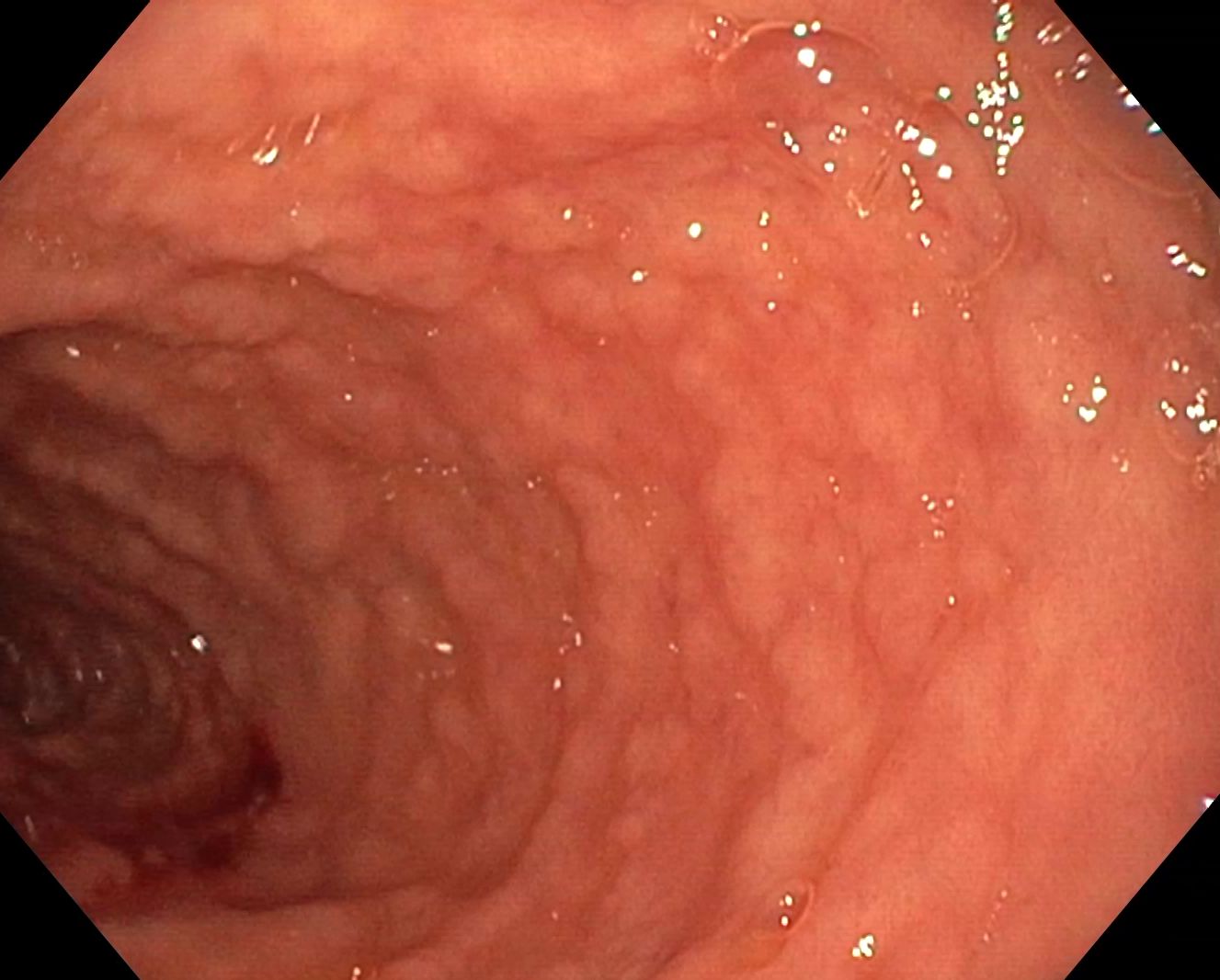
We present the case of a 67-year-old patient, known with cardio-vascular pathology (grade III arterial hypertension, hypertensive cardiomyopathy, sequelae inferior myocardial infarction), who, approximately one month prior to the current hospitalization, presented with jaundice syndrome, later is diagnosed endoscopically with cephalo-pancreatic neoplasm, with biopsies taken at that time (moderately differentiated pancreatic ductal adenocarcinoma), with duodenal infiltration that determines stenosis at this time. level and liver metastasis. The patient’s clinical course was further complicated by progressive inability to tolerate oral intake, appearance of early satiety and anorexia. The worsening of duodenal stenosis is endoscopically highlighted, which could not be overcome endoscopically despite balloon dilation. Subsequently, the patient’s condition worsened, with the worsening of jaundice. The patient was transferred for interventional management of cholestasis and gastric outlet obstruction.
Biologically: significant sclero-cutaneous jaundice, total bilirubin (BT) ¬18 mg/dl, hepatic cytolysis three times the upper limit of normal.
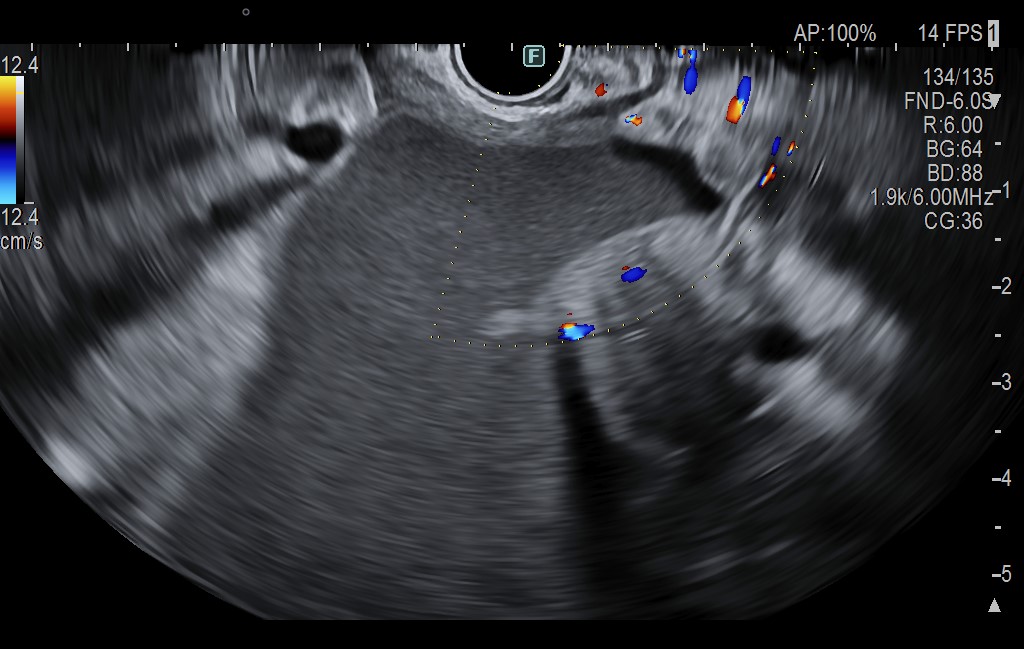
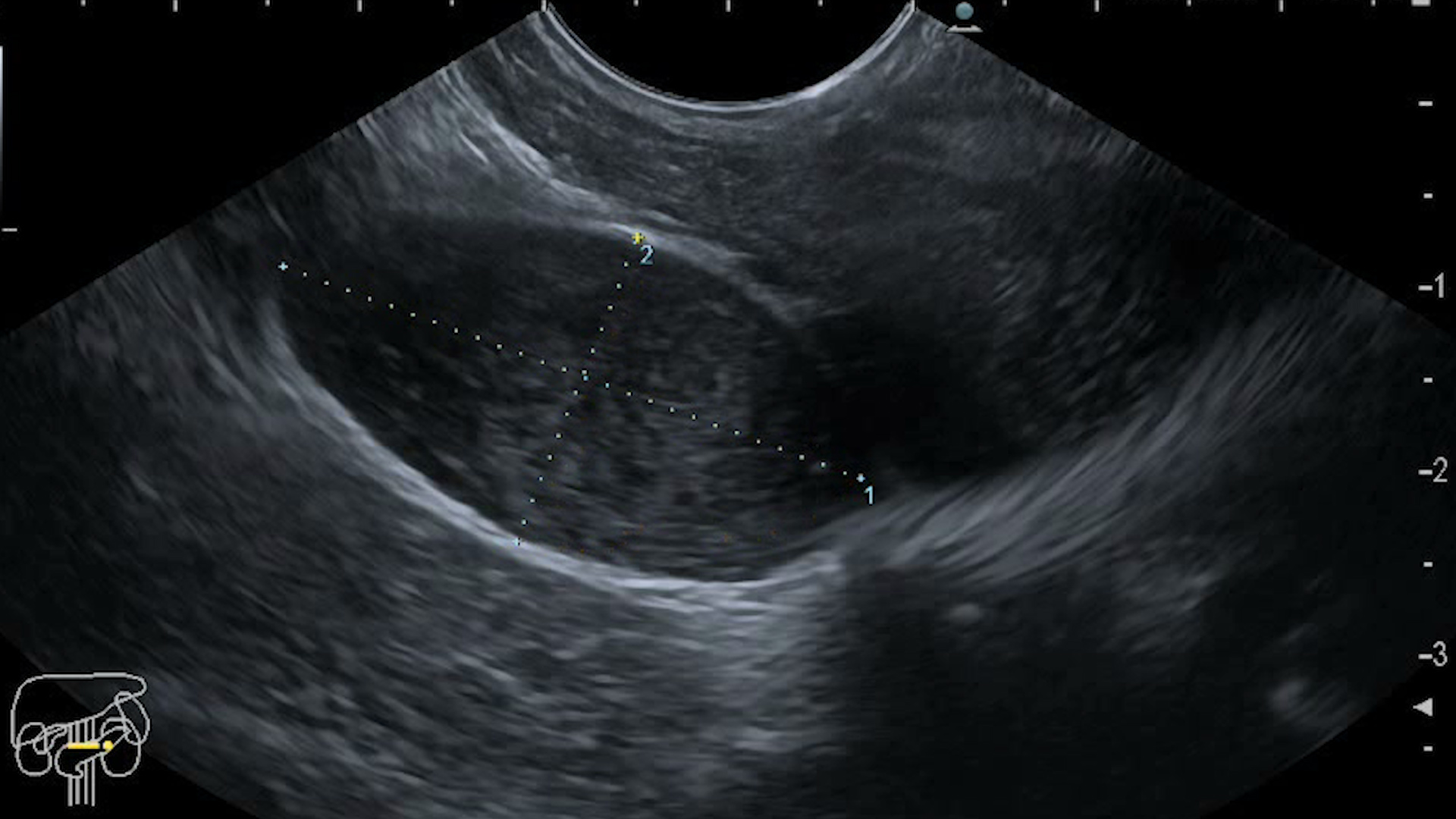
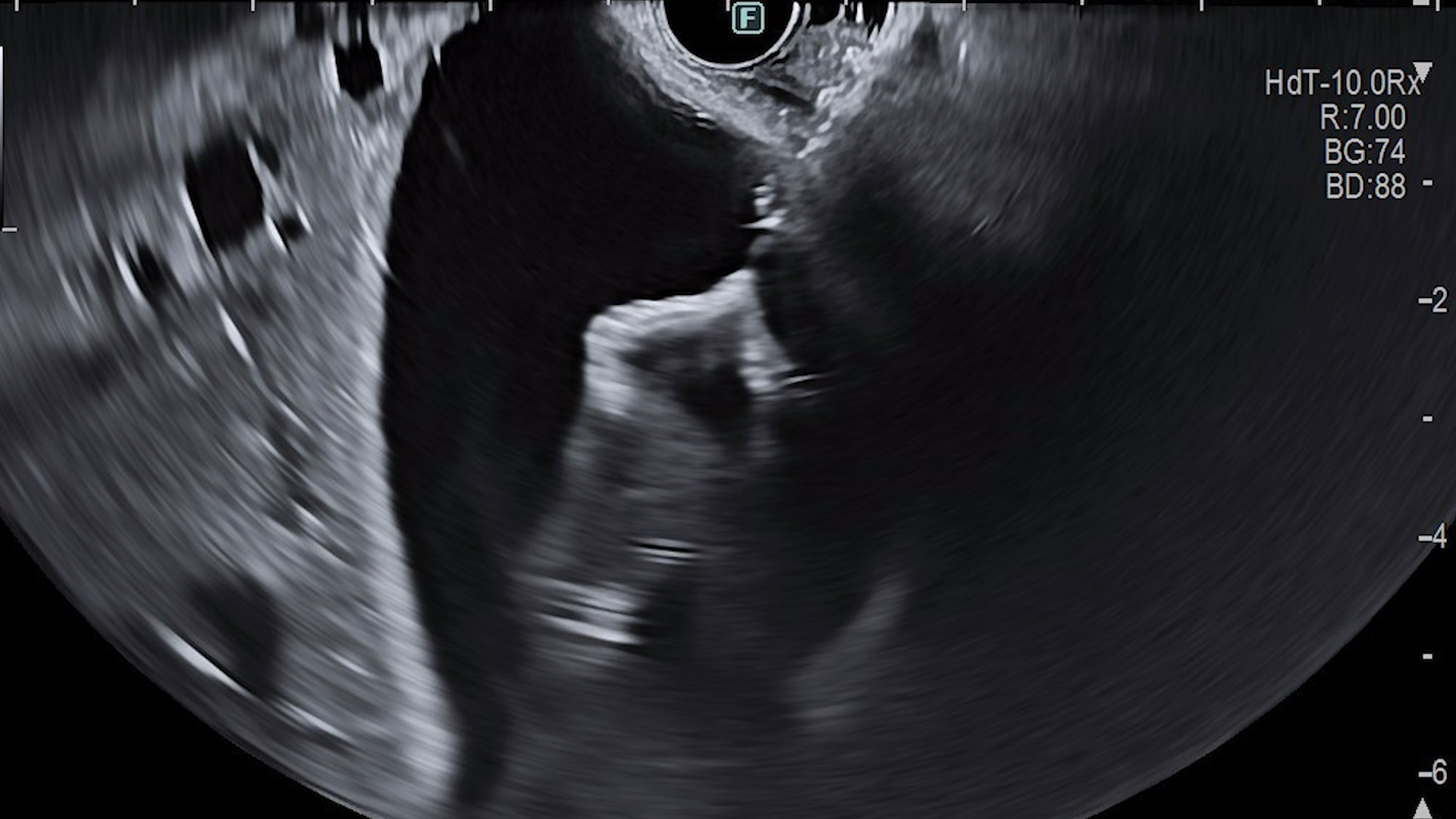
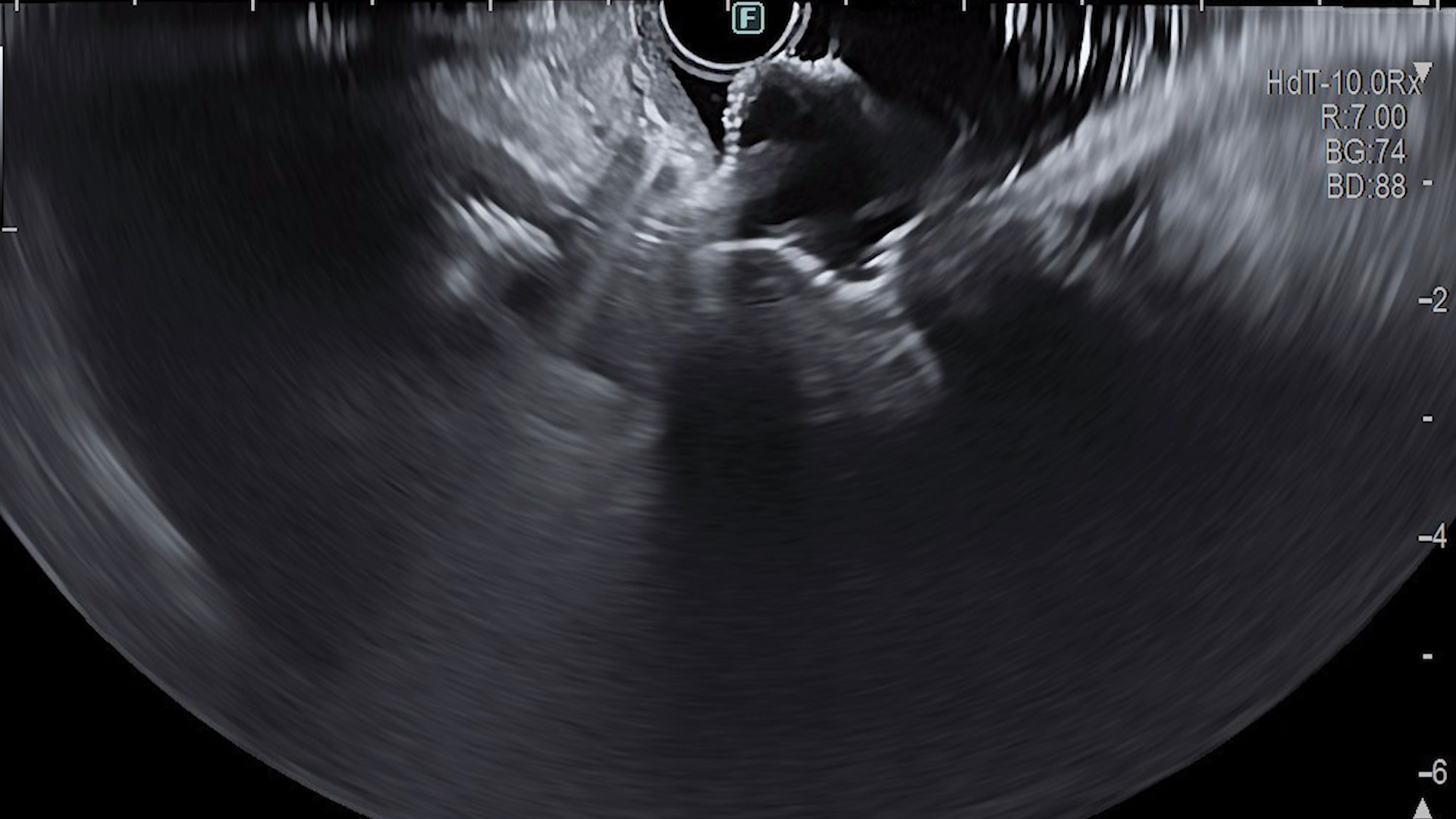
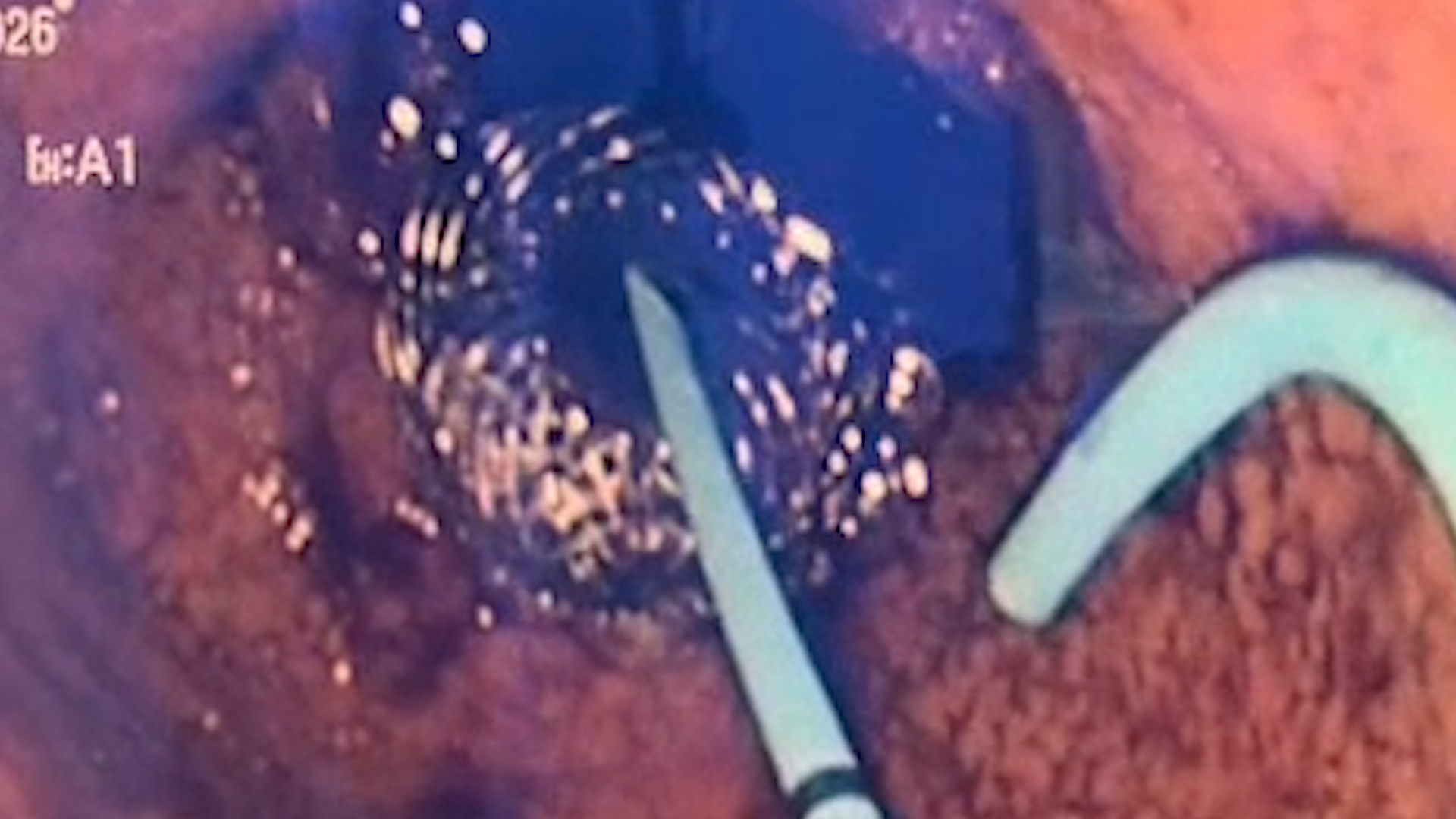
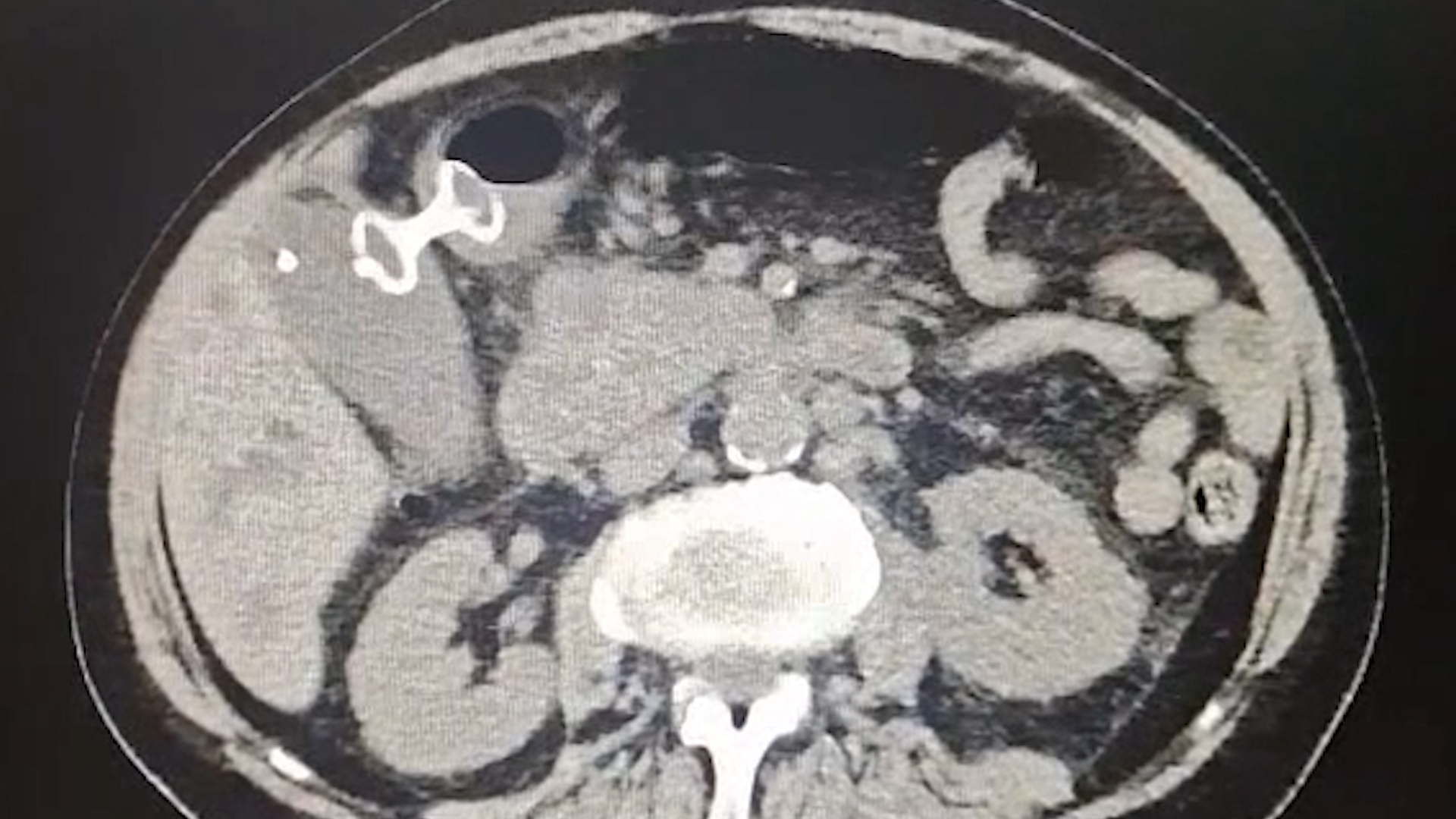
Diagnostic echoendoscopy visualizes the atrophic pancreas, dilated Wirsung duct along its entire trajectory, dilated intra- and extrahepatic bile ducts, respectively gallbladder with markedly distended hydropic gallbladder. Having the possibility of gastric approach and the impossibility of performing ERCP due to duodenal stenosis, the decision was made to perform an EUS-guided cholecystogastrostomy was performed using a 15 × 10 mm electrocautery-enhanced lumen-apposing metal stent (Hot AXIOS®, Boston Scientific). Subsequently, 7 Fr × 7 cm double-pigtail plastic stent was inserted to stabilize the metal stent (Figure 1-5, Video 1). Post-procedure, a CT scan is performed that reveals a normally positioned stent, without signs of complications, respectively pneumobilia within the intra- and extrahepatic bile ducts.
Biological samples collected on the first day after the procedure show a reduction of approximately 50% in TB values (from 18 to 8 mg/dL), followed by stabilization of around 7 mg/dL throughout hospitalization.
During a subsequent endoscopic procedure, a 100 × 20 mm self-expandable metal enteral stent (SEMS; Micro-Tech®) was deployed across the malignant duodenal stricture and secured with two endoscopic clips. Appropriate positioning was confirmed radiologically later, allowing successful resumption of per os feeding.
Endoscopic retrograde cholangiopangreatography (ERCP) remains the main method of treatment for jaundice caused by malignant biliary obstruction. However, a failure rate of 10-20% has been reported, due to multiple causes, such as duodenal stenosis, tumor invasion of the duodenal papilla, or the impossibility of cannulation of the bile ducts. Thus, compared to radiology-guided percutaneous drainage, endoscopically guided biliary drainage has proven better efficacy, reduced morbidity by more than 90%, respectively up to 5 times lower rate of peri- and post-procedural complications. Also, with the advent electrocautery-enhanced lumen-apposing metal stents (EC-LAMS), the feasibility of this procedure has drastically improved [1].
Among available techniques, EUS-guided choledochoduodenostomy (EUS-CDS), which, although it has proven its effectiveness, with a success rate of >85%, has its limitations, including: the common bile duct with a diameter of <12mm, respectively the thickness of the duodenal wall >10mm [1-4].
An alternative aproach is echoendoscopically guided gastric biliary drainage (EUS-GBD), which has also demonstrated a success rate, high safety profile, and low morbidity. The recently published GALLBLADEUS study reported technical success rates of 100% for EUS-GBD versus 97% for EUS-CDS, with comparable clinical success. However, biliary patency at 12 months was significantly higher after EUS-GBD (86% vs. 62%), resulting in fewer reinterventions, while overall survival remained similar [5,6].
Our case illustrates the usefulness of EUS-guided cholecystogastrostomy as an effective rescue technique following failed ERCP due to malignant duodenal obstruction. Subsequent enteral SEMS placement enabled restoration of oral intake, thereby providing comprehensive endoscopic palliation of both biliary and duodenal obstruction.
In cases of failure of the ERCP procedure in patients with malignant distal biliary obstruction, who have not previously undergone a cholecystectomy, a feasible therapeutic option for biliary decompression is EUS-GBD in carefully selected cases. This overcomes the limitations of the EUS-CDS procedure and allows for effective biliary drainage with solid technical and clinical results and high tolerance.

See other cases